Spurs in the Boardroom: How Western Style Is Quietly Taking Over Corporate America
Photo: Internet Archive Book Images, No restrictions, via Wikimedia Commons
The conference room in Dallas doesn't look like a ranch. Neither does the law firm in Denver, the private equity office in Houston, or the executive suite in Nashville. But look closely at what the people in those rooms are wearing, and you'll start to notice something. A structured cognac leather blazer where a navy suit jacket might have been. A hand-stitched belt with a clean silver buckle. Chelsea boots with a western heel instead of the standard Oxford. The details are deliberate, and the effect is unmistakable.
Western power dressing has arrived in corporate America — and it's not going anywhere.
The Psychology of Western Authority
Before you can understand why western style works in professional settings, you need to understand what it communicates. Western wear has always carried a specific set of cultural signals: self-reliance, physical competence, ownership, permanence. These aren't abstract associations — they're baked into the American mythology of the West, reinforced by a century of film, television, and the very real cultural weight of ranching and land ownership.
When someone walks into a high-stakes meeting in a well-cut leather blazer and quality boots, they're not just wearing clothes. They're invoking that mythology. The message, whether conscious or not, is: I am not temporary. I am not here to impress you. I am here because this is my territory.
That's a very different psychological register than the standard corporate uniform — and in rooms where authority is constantly being negotiated, it lands differently.
What Western Power Dressing Actually Looks Like
The key to making western style work in professional environments is restraint. This isn't about showing up in full ranch gear. It's about strategic incorporation — choosing specific western elements and letting them do the work without overwhelming the overall look.
The Structured Leather Blazer
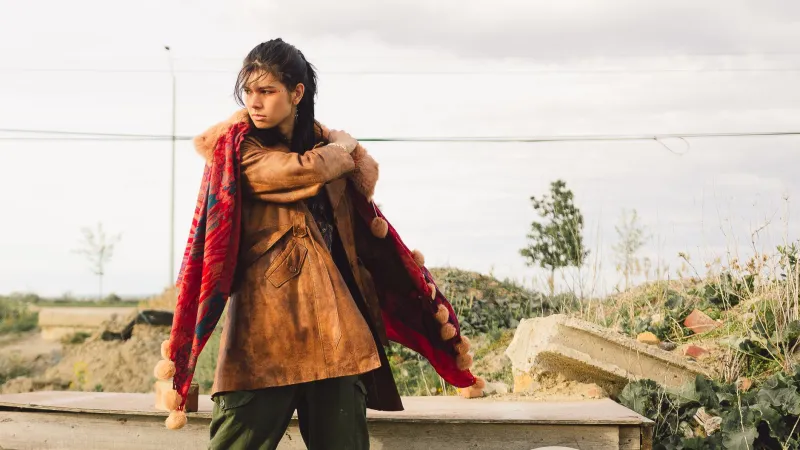
This is the cornerstone piece for western power dressing in professional contexts. A well-tailored leather blazer — not a biker jacket, not a distressed casual piece, but something with clean lapels, structured shoulders, and a fit that reads formal — carries enormous authority in a room. In cognac, deep brown, or black, it works over dress pants, tailored trousers, or dark denim depending on the formality of the environment.
The leather blazer signals something a wool blazer doesn't: durability. It suggests someone who isn't performing professionalism — someone who is simply professional, in the way that ranch owners are simply ranchers. There's no performance in it.
The Belt as Statement
In standard corporate dressing, the belt is invisible — a functional item chosen to match shoes and disappear. In western power dressing, the belt is a detail that rewards attention. A hand-tooled leather belt with a substantial but understated buckle introduces craftsmanship into an outfit in a way that most people notice without being able to articulate why.
The rule here is proportion: the belt should be visible but not dominant. It coordinates with footwear and anchors the look without competing with it.
Footwear That Means Something
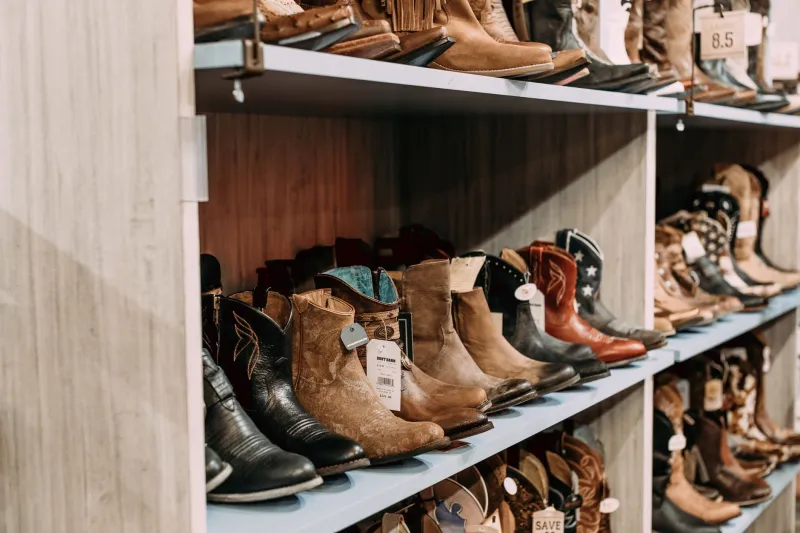
Western boots in a professional context are increasingly common across the Sun Belt and Mountain West — and they're gaining ground in cities that wouldn't have considered them five years ago. The reason is simple: a quality leather western boot communicates the same things as the leather blazer. Permanence. Craft. Confidence.
For the most versatile professional application, a Chelsea-style western boot or a clean-lined riding boot with a modest heel integrates most easily with tailored clothing. Save the more ornate, embroidered styles for environments where the dress code is genuinely relaxed.
Color Palette: The Ranch Aesthetic at Work
One of the subtler elements of western-influenced professional style is color. Ranch aesthetics favor earth tones — saddle tan, deep burgundy, forest green, warm camel, slate blue — that feel grounded and authoritative rather than attention-seeking. These tones work exceptionally well in professional environments because they read as considered rather than loud.
Building a professional western wardrobe around a palette of two or three coordinating earth tones creates a visual coherence that projects exactly the kind of quiet confidence this style is built on.
Where It's Catching On
The geography of western power dressing follows the influence of Yellowstone-adjacent culture — Texas, Colorado, Montana, Wyoming, Tennessee — but it's spreading. In New York and Chicago, the leather blazer has become a recognizable choice among executives who want to signal something outside the standard financial-sector uniform. In Los Angeles, western boots have been boardroom-appropriate for years.
What's changed is the intentionality. Professionals in these cities aren't wearing western pieces because they grew up with them. They're choosing them because of what they communicate in a room full of people who default to the same navy and grey uniform. Standing out with authority — not flash, not novelty, but genuine authority — is a competitive advantage.
The Yellowstone Effect on Professional Style
It would be reductive to attribute all of this to a single TV show, but the cultural impact of Yellowstone on how Americans perceive western aesthetics can't be ignored. The series gave mainstream audiences a weekly masterclass in what authority looks like when it's dressed in ranch wear. John Dutton in a structured canvas coat commands more presence than most characters in three-piece suits.
That image has seeped into the professional consciousness. People who watched Dutton run a boardroom negotiation in worn leather and tailored denim started to understand, intuitively, what that style communicates. And then some of them started dressing that way.
Getting It Right
The difference between western power dressing that works and western power dressing that misses is the same difference between any professional style that works and one that doesn't: fit, quality, and intentionality. Cheap leather looks cheap regardless of the cut. Ill-fitting boots undermine the whole effect. And overdoing it — stacking too many western elements at once — tips from confident into costume.
Choose one or two anchor pieces per outfit. Let the quality of the material do the talking. And wear it like you've always worn it — because in western style, confidence isn't something you put on. It's something you grow into.
The boardroom has always rewarded people who know who they are. Western style just gives you a very specific, very American way to show it.