Layer Like a Dutton: Your Season-by-Season Guide to Western Outerwear That Actually Works
If you've spent any time watching Yellowstone, you've probably noticed that nobody on the Dutton ranch looks cold. Or overdressed. Or like they thought too hard about what they put on that morning — even though, clearly, someone did.
That effortless quality is the whole point of western layering done right. It's a practical system developed over generations of people who needed to work outdoors in wildly variable conditions, and it just so happens to look incredibly good in the process. The good news? You don't need a Montana ranch or a wardrobe department to pull it off. You just need to understand how the layers work together.
Let's break it down.
The Foundation: Understanding the Western Layering System
Before we get into specific outfits, it helps to think about layering in three zones: the base, the mid-layer, and the outer shell. This isn't revolutionary — it's the same logic behind any good layering system. What makes western layering distinct is the materials and the silhouette.
Western layering favors natural fibers and heritage materials: wool, cotton canvas, waxed cotton, leather, flannel, and sherpa. These fabrics breathe, age well, and develop character over time in a way that synthetic materials simply don't. The silhouette tends to run straight and slightly relaxed — not oversized, not slim-fit fashion, but functional and easy-moving.
Keep those two principles in mind and everything else follows naturally.
Fall: The Sweet Spot for Western Style
Fall is arguably the best season for western layering, and it's no coincidence that Yellowstone's most iconic outdoor scenes tend to take place in autumn light.
The Rip Wheeler Approach
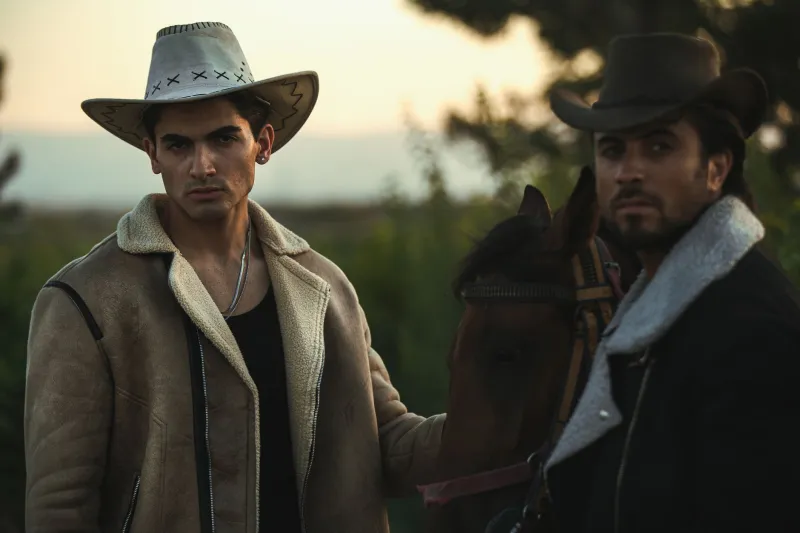
Rip's look is the benchmark for masculine western layering — reliable, no-nonsense, and quietly tough. For fall, build his signature look like this:
- Base: A heavyweight cotton crewneck or thermal henley in oatmeal, slate, or faded olive
- Mid-layer: A flannel shirt worn open, or a canvas chore coat in brown or waxed tan
- Outer shell: A rancher jacket with a sherpa or fleece lining — the kind that looks like it's been in the barn but fits perfectly
The key to this combination is proportion. The outer layer should be substantial enough to read as a jacket, not just a shirt. Look for something with reinforced shoulders and a collar that actually stands up against wind.
The Beth Dutton Approach
Beth's style is sharper and more intentional — she layers with attitude. For women going for that vibe in fall:
- Base: A fitted ribbed turtleneck or slim long-sleeve in black, cream, or deep burgundy
- Mid-layer: A structured western shirt or a tailored flannel in a muted plaid
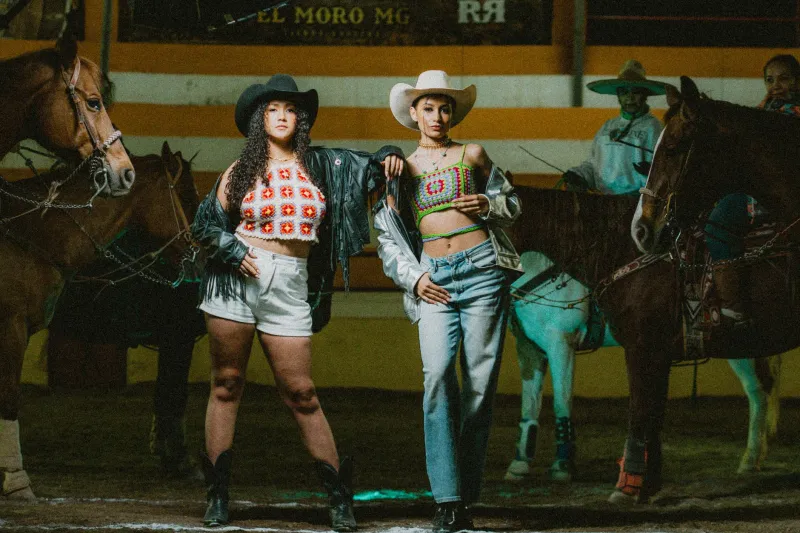
- Outer shell: A leather moto jacket or a cropped canvas jacket with western detailing
Beth's look works because there's always one piece that elevates the whole outfit. A great leather jacket over a simple turtleneck says everything it needs to say.
Winter: Going Heavy Without Going Bulky
Winter layering is where a lot of people go wrong — they pile on too much and end up looking like they're wearing everything they own. Western layering in cold weather is about choosing denser materials, not more of them.
Fabric Priorities for Cold Climates
Wool is your best friend here. A mid-weight wool vest or a wool-blend shirt jacket adds serious warmth without adding significant bulk. Pair it under a full-length waxed canvas duster or a heavy canvas barn coat with a thick sherpa lining and you're genuinely prepared for sub-freezing temperatures.
The John Dutton Silhouette
John's winter look tends toward the commanding: long coats, strong shoulders, earth tones. To channel it:
- Base: A thermal waffle-knit top or merino wool crewneck
- Mid-layer: A quilted vest or wool shirt jacket — this is the insulation layer
- Outer shell: A full shearling or sherpa-lined rancher coat, knee-length if you can find it
The shearling collar is non-negotiable for this look. It's the detail that takes a ranch coat from functional to iconic.
Cold-Weather Tip: Resist the urge to go too dark. Winter is actually a great time for lighter neutrals — cream, camel, oatmeal — which contrast beautifully against dark denim and brown leather boots.
Spring: Lighter Layers, Same Attitude
Spring western layering is about transitional pieces that can handle temperature swings — warm afternoons, cold mornings, and the occasional surprise rainstorm.
A canvas chore coat or a lightweight waxed jacket is the workhorse of spring layering. Wear it over a chambray shirt or a light flannel and you've got a combination that handles 45-to-65-degree swings without breaking a sweat.
For women, a denim jacket with western detailing — contrast stitching, snap buttons, slightly structured shoulders — layers beautifully over a linen blouse or a striped long-sleeve tee.
Spring Fabric Note: Waxed cotton is particularly useful in spring because it's naturally water-resistant. You don't need a full rain jacket if your outer layer is properly waxed. Just shake it off and keep moving.
Summer: Yes, You Can Still Layer
Summer western layering is lighter but it's not gone. A chambray shirt worn open over a plain white tee is a classic combination that works in the heat without feeling overdressed. Swap heavier canvas for lightweight cotton twill. Choose lighter colors — faded tan, dusty sage, off-white.
For cooler summer evenings — on a ranch porch, at an outdoor concert, or in an air-conditioned restaurant — a light flannel shirt jacket or a suede shirt-weight jacket adds just enough warmth while keeping the western aesthetic intact.
Universal Layering Rules for the Western Look
No matter what season you're dressing for, a few principles apply across the board:
Fit the outer layer to the inner layers. Try your jackets on with the layers you actually plan to wear underneath. A rancher coat that fits perfectly over a t-shirt may feel strangling over a wool mid-layer.
Stick to a cohesive color story. Western layering uses a tight palette: earth tones, muted neutrals, faded naturals, and occasional deep jewel tones. Mixing too many colors breaks the cohesion that makes the look feel intentional rather than accidental.
Let texture do the talking. When your palette is neutral, texture becomes the visual interest. Rough canvas against soft flannel against smooth leather — those contrasts are what give a well-layered western outfit its depth.
Invest in the outer layer. Your jacket is doing the most work — visually and functionally. This is where your budget should go. Everything underneath can be simple and affordable; the outer layer is what people see and what tells the story.
Get these fundamentals right and you'll have a layering system that works in Bozeman or Boston, on a trail or at a tailgate. That's the real Dutton family secret: dress for where you are, with gear that's actually built for it, and the style takes care of itself.