Wide Shoulders, Quiet Power: Mastering the Oversized Western Silhouette That Means Business
There's a moment in almost every Yellowstone episode where John Dutton stands at the edge of something — a ridge, a boardroom table, a property line — and without saying a single word, the conversation is already over. His jacket does half the talking. It's roomy across the shoulders, unhurried in its drape, and somehow still looks like it was cut specifically for him. That's not an accident. That's intentional western power dressing, and it's one of the most nuanced style moves you can pull off.
The oversized-but-structured silhouette that defines the Dutton aesthetic has quietly become the gold standard for anyone who wants to project authority without trying too hard. Let's break down exactly why it works — and how to wear it without looking like you raided your grandfather's closet.
Why the Silhouette Works: Psychology Before Fashion
Clothing communicates before you open your mouth. Fitted, body-conscious cuts signal effort and attention to personal image — useful in some contexts, but they can also read as eager or defensive. A deliberately oversized outer layer, on the other hand, communicates something closer to ease. It says I'm not trying to impress you, which — paradoxically — is enormously impressive.
Broadened shoulders and relaxed chest panels visually expand the upper body, a cue that human brains have associated with physical dominance for a very long time. When that volume is paired with structured tailoring underneath — a fitted chambray shirt, a tailored vest, a sharp collar — the contrast creates what stylists sometimes call a "controlled looseness." You look powerful because you look unhurried. And in western culture, where restraint and self-sufficiency are core values, that unhurried quality reads as deep confidence.
The Yellowstone costume department understood this completely. Characters at the top of the Dutton hierarchy wear pieces with generous cuts and heavier fabrics. Characters who are still proving themselves tend to wear things that fit closer to the body. The wardrobe is basically a social map of the ranch.
The Three-Layer Foundation
The Dutton silhouette almost always operates in three layers, and getting those layers right is where most people go wrong.
The base layer should be fitted and clean. A slim-cut western shirt in a solid or subtle pattern — think muted plaids, worn-in chambray, or heavyweight cotton — keeps the foundation from adding bulk where you don't want it. This layer is doing structural work. Don't overthink it.
The middle layer is where structure lives. A tailored vest, a fitted canvas chore coat, or even a slim fleece-lined overshirt creates definition through the torso. This is the layer that keeps the whole look from going shapeless. The key word here is fitted — not tight, but deliberate. It should follow your torso without gripping it.
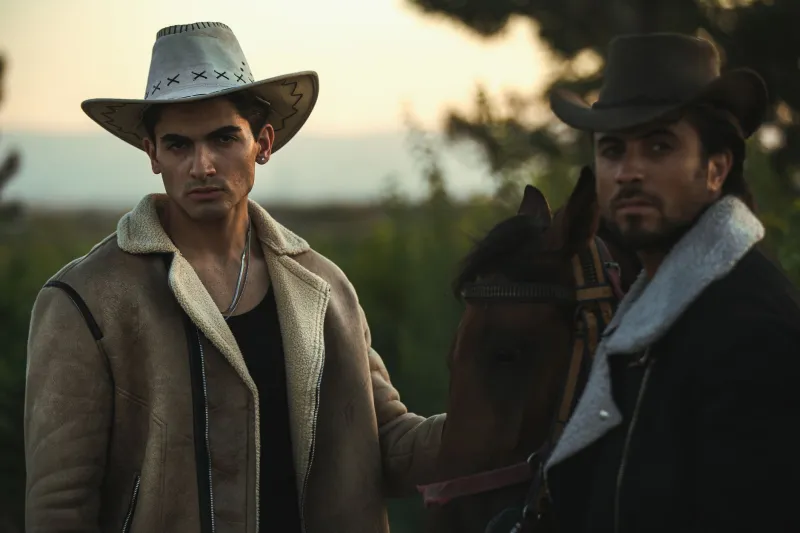
The outer layer is where you introduce volume. A rancher coat, a shearling-collar barn jacket, or a heavyweight duster with some room through the chest and shoulders — this is the piece that carries the silhouette. The outer layer should be at least one size larger than you'd normally reach for. If it feels a little dramatic in the dressing room, you're probably in the right neighborhood.
Fabric Weight: The Detail That Separates the Look from a Costume
One of the quickest ways to spot someone who's wearing western style versus someone who's living it is fabric weight. Lightweight, drapey materials — the kind that flutter and fold — don't carry the Dutton silhouette. They make it look like a costume. Real western outerwear is built from materials that hold their shape: full-grain leather, waxed canvas, boiled wool, heavy-duty denim, and shearling.
These fabrics have structure of their own. When you wear a properly weighted barn coat or a thick leather rancher jacket, the garment maintains its silhouette whether you're standing still or moving. That self-supporting quality is part of what creates the impression of effortless authority — the clothes look composed because the fabric is doing its job.
As a general rule, the outer layer should be the heaviest piece you're wearing. If your jacket is lighter than your shirt, something's off.
Proportion: Where Most People Get It Wrong
Volume at the top needs to be balanced with something more streamlined below. The Dutton aesthetic pairs roomy jackets with straight-leg or slim-taper jeans and clean-profile boots — not wide-leg trousers or chunky sneakers. The bottom half of the outfit is meant to ground the silhouette, not compete with it.
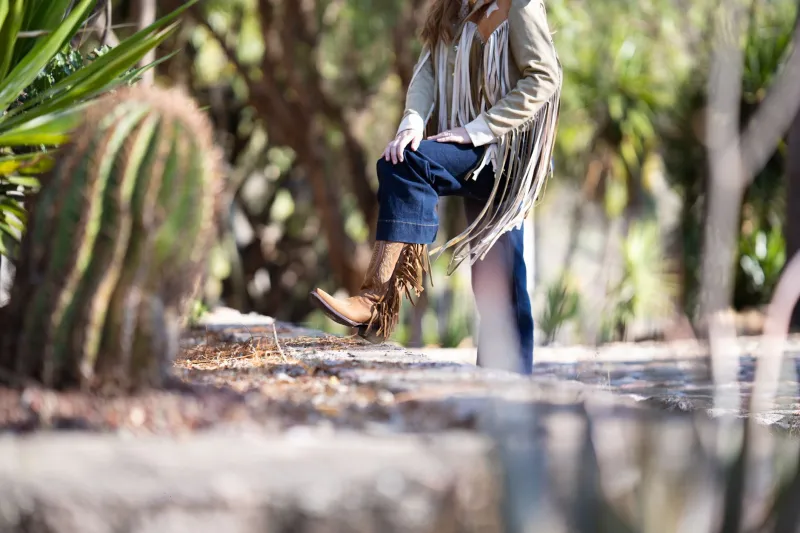
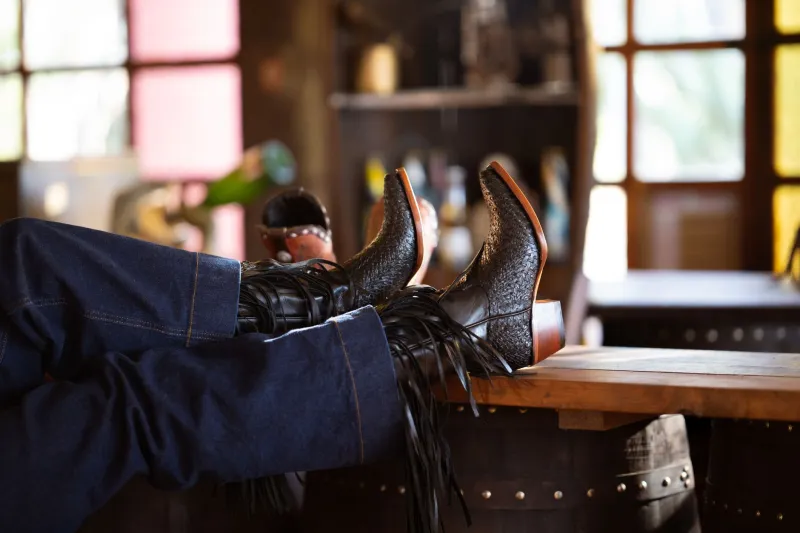
Boot choice matters more than people think. A slim-shaft western boot with a modest heel keeps the eye traveling upward, reinforcing the presence of the outer layer. Stack your jeans slightly over the shaft for a relaxed, lived-in look that still reads as intentional.
If you're wearing a longer outer layer — a mid-thigh rancher coat or a duster — proportion becomes even more critical. Keep everything below the hem as clean and unfussy as possible. One statement piece at a time.
Making It Work Off the Ranch
The beauty of this silhouette is that it travels. A shearling-collar canvas jacket worn over a fitted merino sweater and straight dark denim works just as well at a steakhouse in Dallas as it does at a Saturday morning farmers market in Denver. The key is calibrating the formality of your base and middle layers to the occasion while keeping the outer layer consistent.
For more formal settings, swap the chambray base for a crisp white or cream button-down and add a structured vest. For casual weekends, let the base layer be a simple heavyweight tee and let the jacket carry the weight of the look.
The Dutton silhouette isn't about cosplaying a rancher. It's about understanding that the way your clothes sit on your body communicates something before you say a word. Get the volume, the weight, and the proportions right — and you won't need to say much at all.